 Alt
AltStart here: your generator will probably throw a ground fault
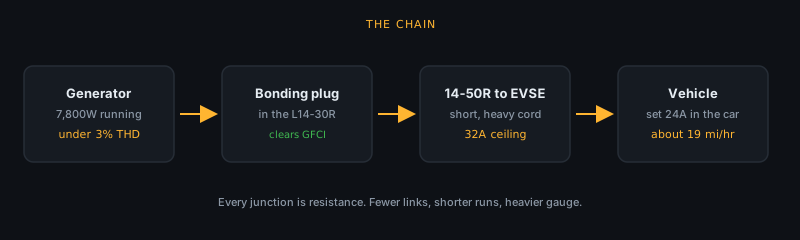
Most portable generators ship with a floating neutral. Plug an EV charging cable into one and it faults out immediately — no charge, just a blinking light. It isn't broken. It needs a bonding plug, and almost nobody explains this before you're standing in the cold.
And check for a 240V outlet
A generator with only 120V receptacles caps EV charging at roughly 5 miles of range per hour — and no amount of extra wattage changes that. The outlet is the bottleneck, not the engine. What size you actually need →
Guides
The bonding plug problem
Why your EV won't charge from a generator, and the $20 part that fixes it.
What size generator?
Derating, continuous load, and why the sticker wattage lies to you.
Inverter only — why
Conventional generators run 15–25% THD. What that does to an onboard charger.
Every way to charge, ranked
Public, home, solar, and generator on cost per mile and outage resilience.
Charge rate calculator
Enter your generator's rating, get a safe amperage and miles per hour.
The test rig
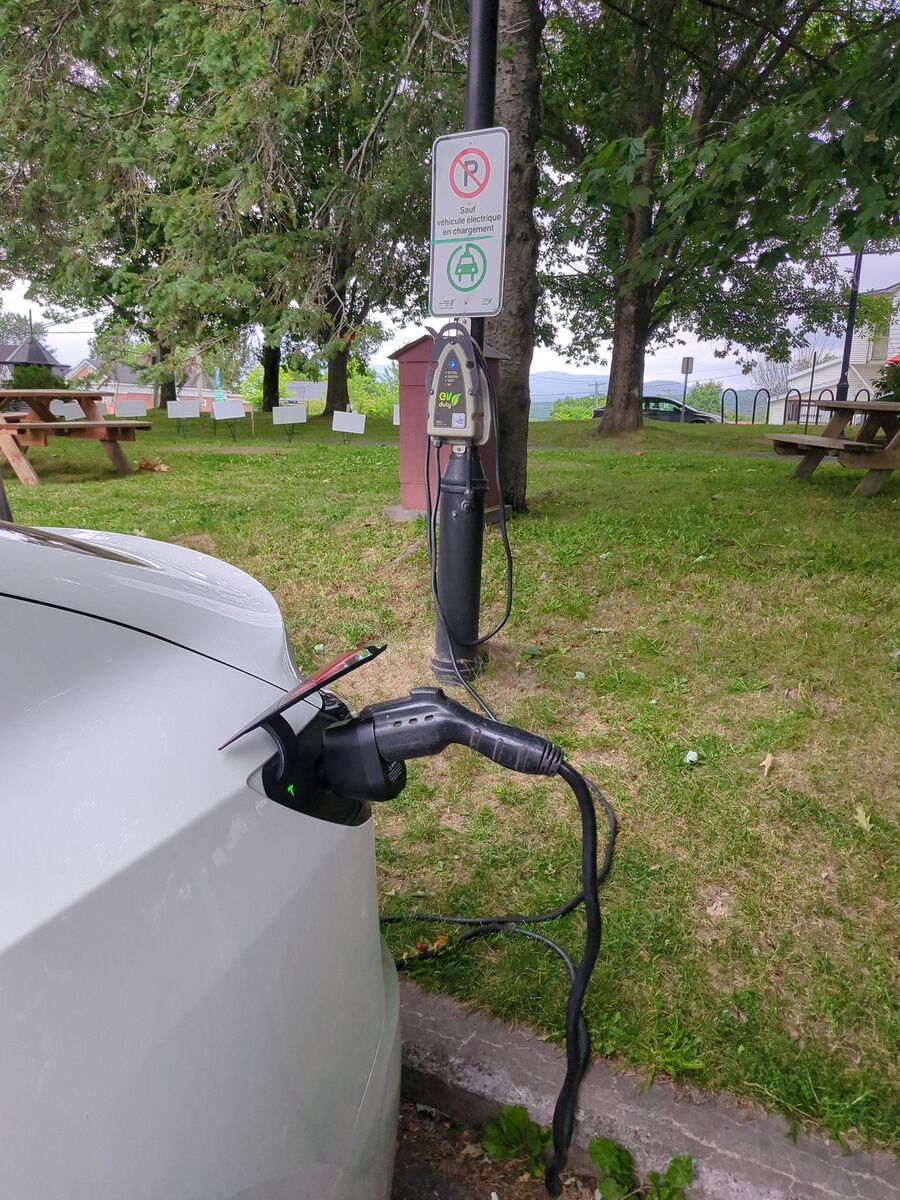
Everything published here is measured on hardware I own and run, not spec sheets I read.
| Component | What it is |
|---|---|
| Generator | GENMAX GM10500XiT — open-frame tri-fuel inverter, 7,800W running on gasoline, under 3% THD |
| Bonding | Factory-supplied twist-lock bonding plug, installed and verified |
| Connection | NEMA 14-50R to Tesla Mobile Connector |
| Vehicle | Tesla Model Y |
| Climate | Northern Vermont — which means the cold-weather numbers are real |
Disclosure: Some links on this site are affiliate links, and I may earn a commission
if you buy through them at no extra cost to you. I only link hardware I have used or would buy myself.
Full disclosure →